


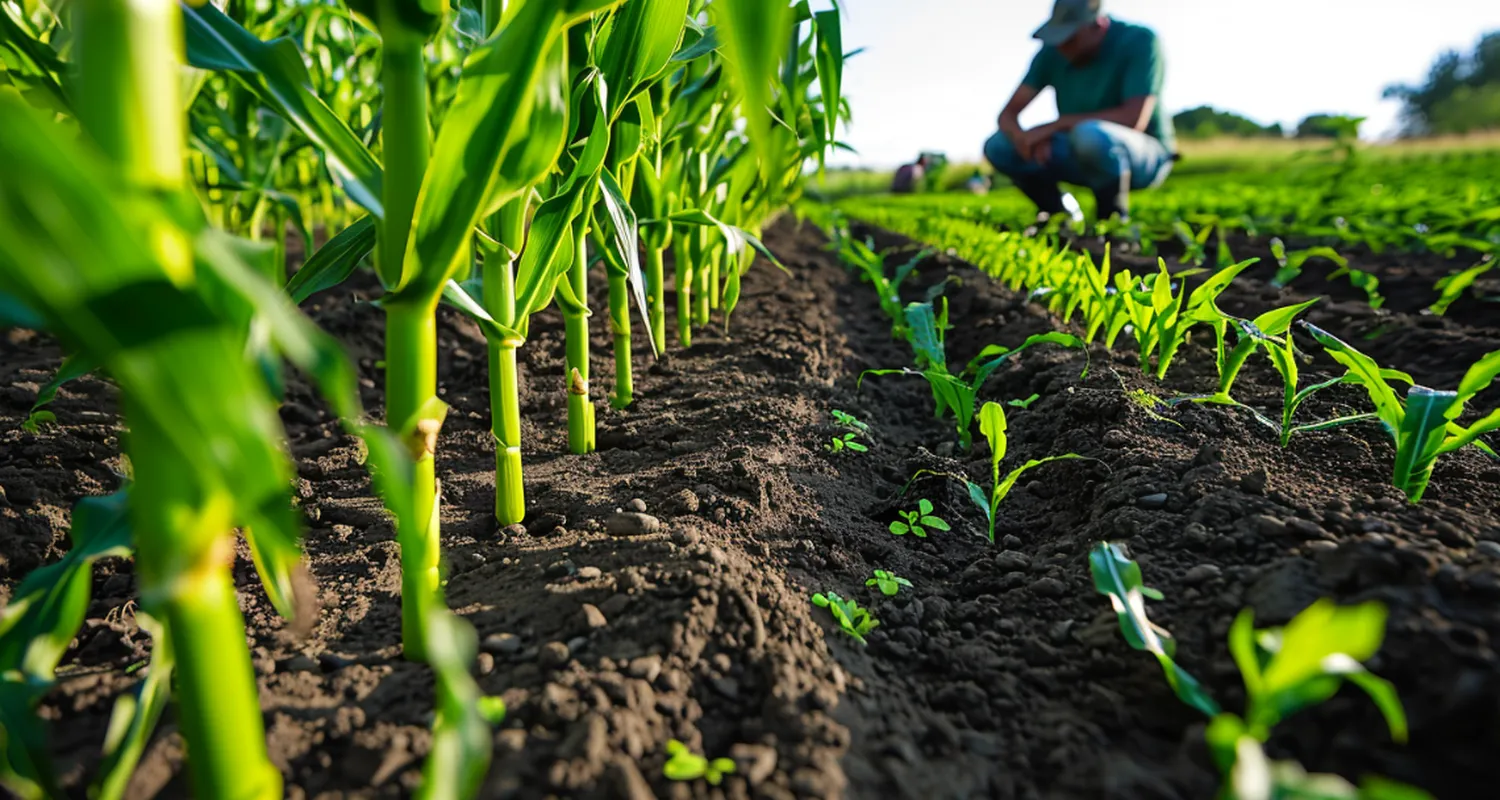

The role of soil in long-term agricultural sustainability

Veröffentlicht
9. Februar 2026
Read
5 minutes
The role of soil in long-term agricultural sustainability
Agriculture is at a crossroads. For decades, food systems have prioritised scale and short-term productivity, often at the expense of natural resources. Soil health is increasingly recognised as a critical factor in long-term agricultural sustainability. As farming systems face growing pressure from climate change, land degradation and food security demands, attention is shifting away from chemical-intensive practices toward regenerative and soil-centric approaches.

Anuradha Patil, Senior Regional Consultant at Kestria MalaysiaCnetG, interviewed Avinash Mokate, Director at Sunfloritech Ltd – Black Tulip Group, recognised for advancing soil sustainability and regenerative farming in commercial floriculture. He has led soil-health-centric practices, reduced chemical inputs and received Kenya Flower Council Recognition for Best Soil Health Management. In this interview, Avinash shares insights from decades of experience in commercial agriculture on how soil health, regenerative farming and nature-aligned practices can sustain productivity while restoring ecosystems.

Avinash challenges conventional views on productivity, land use and mechanisation, explaining how regenerative approaches can be integrated into large-scale farming without compromising yields, economics or resilience.

How do you assess the role of soil in long-term agricultural sustainability?

Avinash explained that soil is one of the most fundamental elements supporting life and is the primary science that brings these elements together to produce food and sustain life on Earth, yet its vital role in sustaining human life is often underestimated.

Having been trained in chemical-intensive farming, Avinash once believed that chemical inputs represented progress but soon realised that this approach is unsustainable. Agriculture should not be toxic or damaging to farmers, soil or ecosystems. Conditions that did not exist 70 or 80 years ago are the result of choices that now need to be reconsidered.

What factors led to the shift toward chemical-intensive agriculture?

After World War II, research on burned plant material led to the identification of limiting nutrients, fueling the belief that soil required artificial replenishment to sustain yields. After the explosives demand fell, wartime chemical industries pivoted to fertilisers, embedding synthetic inputs into agriculture. This shift was driven by the mistaken view that soil alone cannot support a growing population, prioritising short-term yields over long-term soil health.

How did earlier generations farm sustainably without artificial fertilisers, and what has driven today’s reliance on chemical inputs?

What’s surprising to hear is that human food needs are lower than often assumed; around 0.18 hectares per person annually can meet dietary requirements, suggesting land availability is not the primary constraint. The real issue lies in land-use priorities. Agriculture increasingly focuses on cash and non-food crops such as sugarcane, cotton and biofuels, while over 70% of global agricultural land is used for animal feed like soy and corn, driving deforestation, including in the Amazon.

Animal husbandry places significant strain on agriculture due to inefficient feed-to-protein conversion and rising meat consumption. Dietary choices, rather than population growth, are the main driver of land pressure. A shift toward plant-based diets would substantially reduce land use and enable forest restoration. 

However, dominant global narratives continue to frame food security around population growth and land scarcity, overlooking broader drivers.

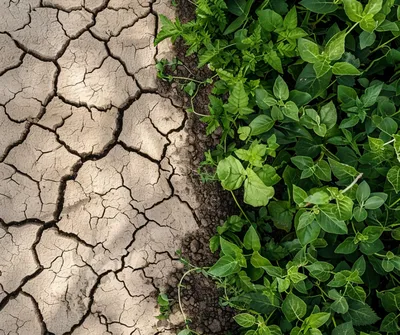
How do regenerative farming approaches contribute to maintaining and improving soil health?

Avinash elaborated that approximately 75% of plants are dicots (nitrogen-rich) and 25% monocots (carbon-rich). When their residues decompose together, they form humus with an optimal carbon-to-nitrogen ratio. Humus underpins soil health by supporting microbial life, nourishing plants and sequestering carbon.

Intercropping by mixing monocots and dicots, as seen in permaculture, mimics forest systems, improves soil and crop resilience and reduces reliance on synthetic fertilisers. The key benefit lies in diversity itself, which creates healthier, self-sustaining soil systems.

In the 1980s, intercropping and diverse crop rotations were common, supporting soil health and resilience. Over time, mechanised agriculture shifted toward monoculture systems.

Intercropping was replaced by monoculture to suit mechanization, prioritising machines over human intervention. While plantation crops such as indigo, sugarcane and cotton supported economic growth, they also led to land overuse and ecological degradation, explained Avinash.

Is it possible to reduce the negative impact of mechanisation on soil without reverting to traditional farming, and what practical steps can be taken today?

Avinash emphasised that sustainability maintains current conditions, while regenerative agriculture improves soil health with each cycle by returning biomass to the soil.

Making machinery progressively lighter, thereby reducing soil compaction and improving soil structure. Even without livestock, regenerative cropping can be applied by sowing new crops directly into the residue of the previous harvest using light equipment. For example, a practice already used in countries such as Kenya, where oilseeds are grown between harvested wheat rows, improves soil health over time.

Soil improvement can be measured through rising organic matter levels. As soil structure improves, water infiltration increases, allowing rainfall to be absorbed rather than run off, and the soil begins to function like a sponge, which is a clear indicator of progressive soil recovery.

Are there natural ways to reduce chemical use while managing weeds and pests in commercial agriculture?

Weeds are often misunderstood. Rather than being harmful, they act as soil’s protective armour and indicate underlying conditions such as nutrient imbalance, pH and mineral composition, knowledge largely absent from formal agricultural education.

Weeds compete with crops primarily for light, not nutrients or water. The objective is management, not elimination. Simple trimming keeps weeds below the canopy without disturbing roots.

When managed, weeds sequester carbon, improve structure, enhance biodiversity, support microbiology and prevent erosion. Regenerative farming embraces managed diversity over visually “clean” fields.

Should agricultural industries introduce advisory roles to bridge traditional and commercial farming without increasing costs or reducing yields?

Avinash firmly believes that commercial output must not be compromised. The challenge lies in integrating regenerative practices into existing systems, an area Avinash has worked on for over 15 years. The transition phase is the most difficult as farmers lack practical guidance, financial support and incentives. Chemical inputs are cheap, profitable and strongly backed by policy, while regenerative practices, based on principles rather than products, lack similar support.

Regenerative knowledge is shared through books, podcasts and online platforms, but remains outside mainstream education. Scaling these practices requires demand from consumers.

Are regenerative farming practices unlikely to achieve meaningful impact at scale without policy-level adoption and support?

Avinash challenged the notion that change must originate from governments. Governments usually face competing interests, as multinational corporations hold far greater financial power. 

His experience indicates that “policy follows consumer demand”. When consumers specify how food should be produced, farmers respond. Demand for products like organic food or cold-pressed oils drives supply chains to adapt. “Informed consumer choice is the most effective catalyst for change.”

What key message should the agriculture industry take away from this discussion on sustainable farming?

Agriculturists have an important role in guiding the shift from chemical-intensive farming toward regenerative practices to safeguard future generations. If current methods persist, the risks include land degradation, toxic food systems and rising health costs. With balanced land-use priorities, existing resources are sufficient to feed growing populations.

Regenerative practices such as residue retention, intercropping, biomass return and post-harvest grazing restore soil structure, strengthen resilience and reduce dependence on heavy machinery and are already being applied successfully in floriculture by Avinash and his team.

In summary, “the core problem is the widespread perception that frames food security around population growth and land scarcity, rather than focusing on land use and dietary choices”.

Key takeaways on soil and agricultural sustainability

This discussion highlights that soil health is not a constraint to productivity but a foundation for long-term agricultural sustainability. Regenerative practices such as intercropping, residue retention, biomass return and reduced chemical inputs can improve resilience, protect ecosystems and maintain commercial yields.

Rethinking land use, dietary choices and farming systems, rather than relying solely on inputs and mechanisation, will be critical to sustaining global food systems for future generations.

Anuradha Patil